Mechatronic
head,
18 DOF
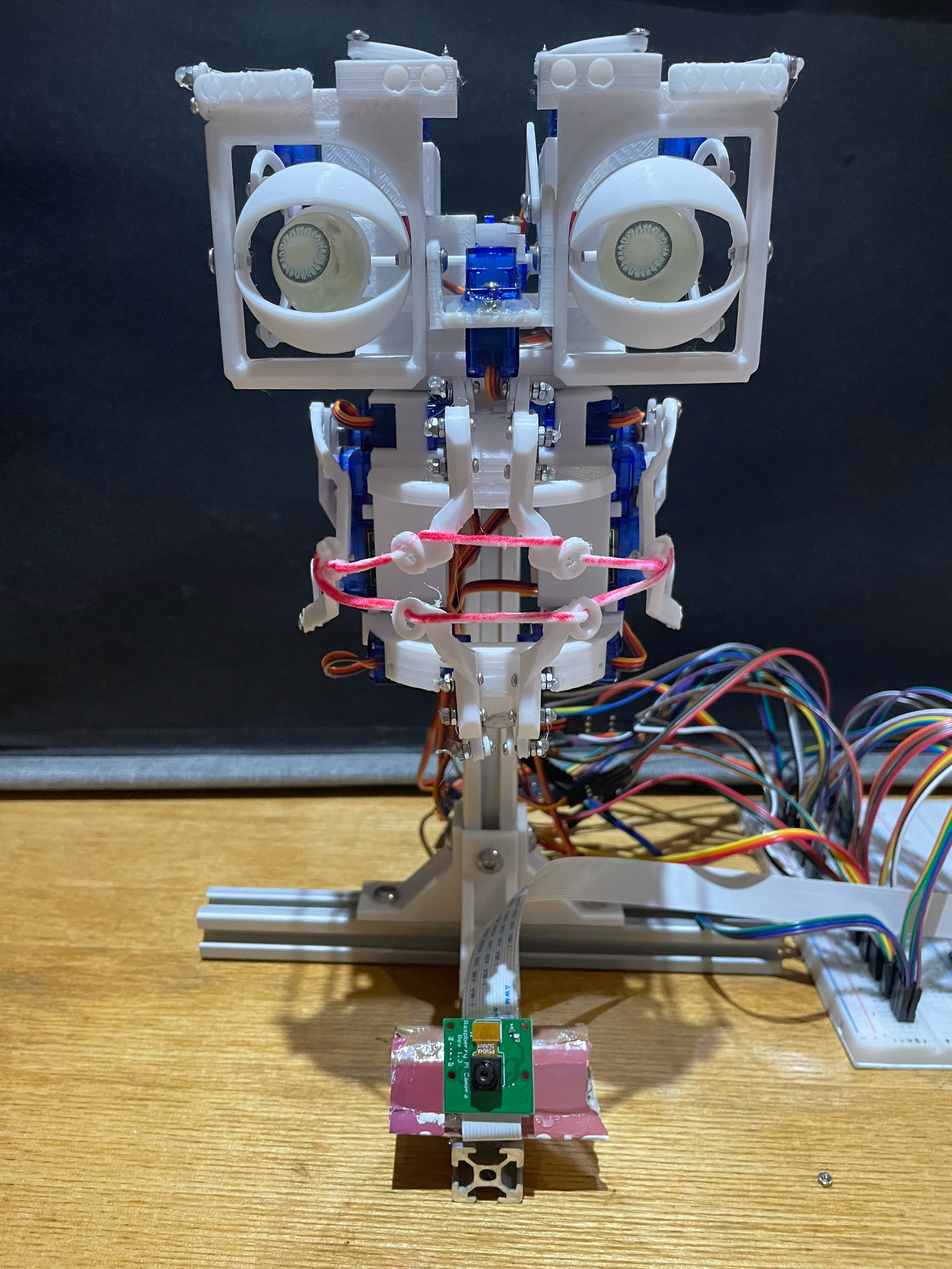
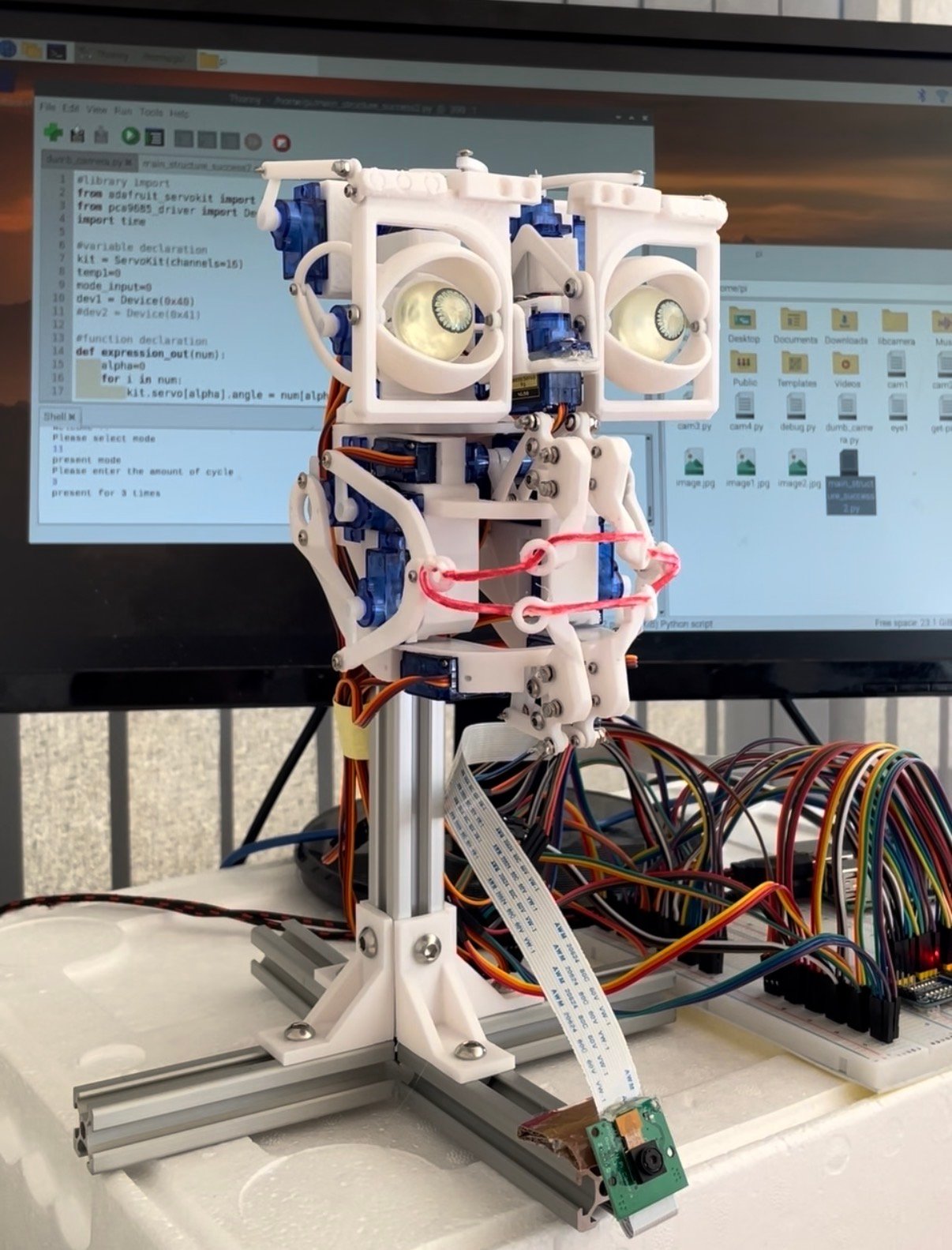
An original humanoid skull with eighteen degrees of freedom, built to hold a real facial expression and to follow a face across a room. I drew the mechanism, designed the electronics, printed and assembled every part, and wrote the control and vision code. It won the W Renwick prize for best software-based project of the year.
Drawn as a
mechanism
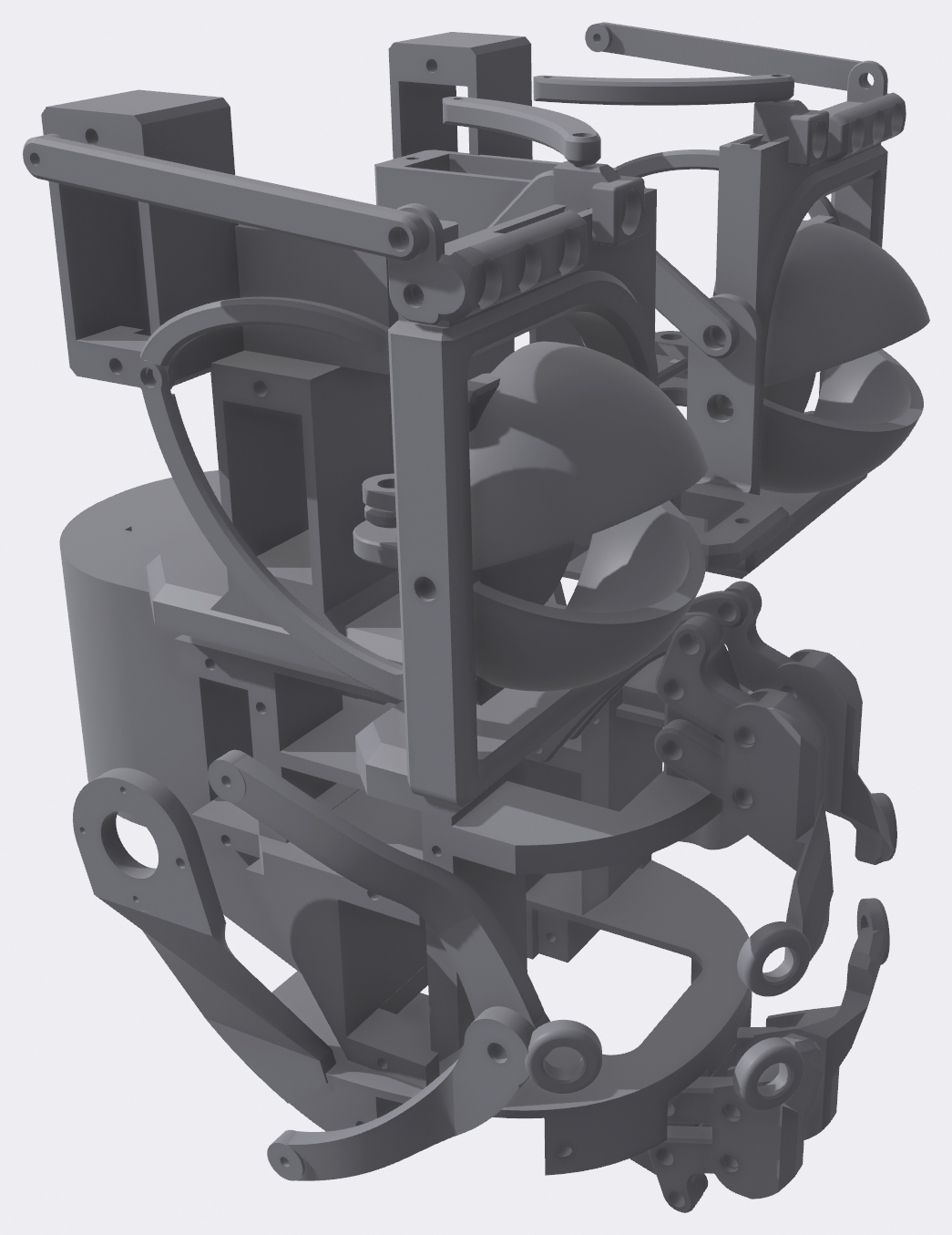
Eighteen axes in the volume of a skull means the linkages decide the design, not the face. Every bracket, pivot and horn was modelled and checked for travel and collision before printing, so the assembly went together once instead of four times.
It looks
back at you
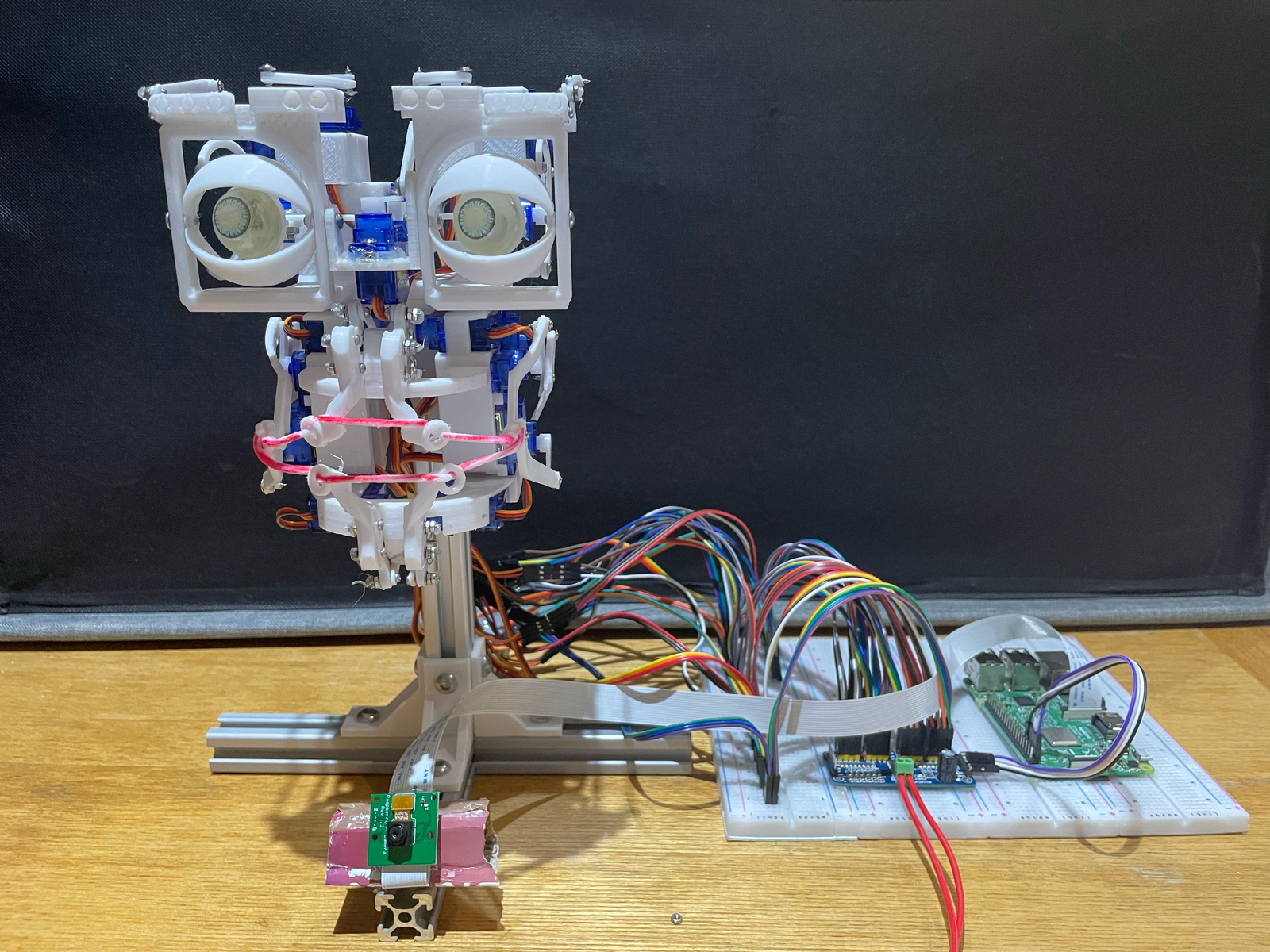
A camera under the chin feeds OpenCV; the detected face position becomes a gaze target, and the eye axes chase it while the lids and brow keep the expression alive. The same interface plays canned expression sets on demand, which is what a show operator actually needs.